Standing in front of a Brooklyn tap list can feel like a quiz you didn’t study for. Brooklyn craft beer is easier than it looks: learn a few styles, taste in small pours, and ask questions.
| Item | Value |
|---|---|
| Breweries in Brooklyn at the start of the 20th century | 45 breweries |
| Breweries in Brooklyn by 1976 | 0 breweries |
| Breweries in Bushwick and Williamsburg by 1904 | 44 breweries |
| Share of America’s beer brewed in Brooklyn at one point before Prohibition | 10 percent |
| Breweries that followed Brooklyn Brewery, per The Bridge’s ranking | 19 others |
| Kings County Brewers Collective launch | July 2016 |
These figures come from The Bridge and a January 2017 profile on CraftBeer.com. Both are older pieces and the figures can change, so check the source before you rely on them.
Why Brooklyn craft beer has a story worth knowing
Brooklyn’s beer story is a boom, a bust and a comeback. According to The Bridge, Brooklyn had 45 breweries at the beginning of the 20th century, but zero by 1976. That drop makes today’s taprooms feel a little like a second act.
The neighborhoods matter too. A CraftBeer.com profile says that by 1904, Bushwick and nearby Williamsburg boasted 44 breweries, producing lots of hoppy pilseners. So when you see a hoppy lager on a Brooklyn menu today, you are looking at something with local roots.
The same profile reports that, at one point before Prohibition, Brooklyn brewed 10 percent of America’s beer, thanks to a large population of German and Austrian settlers, according to the New York Times. That is a useful thing to know when you wonder why a borough this size has so many opinions about lager.
The old brewing era ended in Bushwick in 1976, when Schaefer, who made the official beer of the Brooklyn Dodgers, ended production in Brooklyn. The Bridge adds that a dozen years after the count hit zero, former journalist Steve Hindy and a partner launched Brooklyn Brewery, followed by 19 others in the years after.
You don’t need to memorize any of this to enjoy a pint. It does help to know that the names on a tap list, the neighborhood taprooms and even some of the beer styles carry a local thread. For the full timeline, read the history of brewing in brooklyn guide.
A beginner’s map of beer styles
Style names can sound like a foreign language, so start with what you actually taste. Most beginners get further by asking a few plain questions than by memorizing a style chart.
- Hoppy or malty? Hoppy beers lean bitter, citrusy or resinous. Malty beers lean toward bread, caramel or toast.
- Light or dark? Color is a hint, not a promise, so treat it as a starting clue.
- Sweet, dry or sour? This tells you more about how a beer feels than its name does.
- Easy-drinking or big? Some beers are built to be finished over a long conversation. Others are built to be sipped slowly.
The CraftBeer.com profile of Kings County Brewers Collective, usually shortened to KCBC, shows how wide the range can be inside a single brewery. It says each brewer has a style preference: Zack Kinney likes sours and barrel-fermented beers, Tony Bellis likes hoppy, classic session and experimental beers, and Pete Lengyel likes “SMaSH” beers, meaning single malt and single hop. Those three tastes alone cover a lot of ground on a tap list.
You can borrow that range as a template for your own palate. Decide which of those three preferences sounds closest to what you enjoy, and treat it as your starting lane on the next menu. If you lean toward sours, look for words like “sour,” “barrel” or “wild.” If you lean toward hops, scan for IPA labels, and if you want something simple and balanced, ask the staff which beers they would call session beers.
The SMaSH idea is especially handy for learning. Because the label promises a single malt and a single hop, there are fewer ingredients to untangle, so the flavors you notice are easier to trace back to their source. If a taproom has a beer like that, it is a tidy way to train your palate.
Styles named in that profile
The same CraftBeer.com piece, written in January 2017, names several beers that make handy examples of style labels you may meet on a menu.
| Style label | Example named in the profile |
|---|---|
| West Coast-style red IPA | “Nightmare on Troutman Street,” brewed with Bitter & Esters |
| Double IPA | “Yeah Buddy!,” brewed with Finback Brewery using Valencia oranges |
| Hoppy lager | “Taco Wednesday,” a collaboration with Interboro |
| IPA | “Dangerous Precedent,” KCBC’s first can |
| Red wine barrel-aged amber sour | KCBC’s first bottle |
The beers and style labels in this table come from the January 2017 CraftBeer.com profile, which describes some of them as upcoming at the time. Details such as availability can change, so check the source and the brewery’s own listings before you go looking for a particular pour.
Notice how each label packs in several clues. “West Coast-style” hints at a hop-forward character, “double” hints at extra strength, and “barrel-aged” tells you the beer spent time in wood. Reading a style label this way turns it from jargon into a short description.
Color words deserve a little caution. A red IPA and an amber sour can look alike in the glass and taste completely different, so use color as a clue about the appearance and let the style word guide your guess about flavor.
Beer names tell you even less than colors do. Playful titles such as “Taco Wednesday” or “Dangerous Precedent” say nothing about taste, which is why the style line matters more than the name. When a name is clever, look just beneath it for the style.
Ingredient notes are another kind of clue. The profile mentions Valencia oranges in connection with “Yeah Buddy!,” and when a label names a fruit or spice, you can expect that flavor to show up somewhere in the glass. Treat it as an invitation rather than a warning.
When you meet a label you don’t recognize, try a quick routine:
- Split it. Break the label into its separate words, such as a region, a strength and a base style.
- Guess. Decide what each word probably suggests about color, bitterness and sweetness.
- Check. Ask the staff whether your guess is close.
- Taste. Take a small sip and compare it with your guess.
Each round of guessing and checking makes the next menu easier to read. After a few visits you will start to spot patterns without thinking about it. That is the point where a long tap list stops feeling like a quiz and starts feeling like a menu of options.
Where to go when two styles blur together
The two most common mix-ups for newcomers are ales and lagers, and IPAs and pale ales. If you can’t tell them apart, the guide on lager vs ale is a good place to start. After that, the breakdown of ipa vs pale ale will help you pick between two styles that often share a menu.
Hazy beers deserve their own mention because the look surprises people. If a cloudy pour in your glass makes you wonder whether something went wrong, the explainer on what is a hazy ipa covers why that is usually deliberate.
Once you know the vocabulary, mistakes get cheaper. A pour you don’t love becomes useful information instead of a disappointment, and your next order gets sharper. Treat your first few visits as research rather than a test, and keep a running list of the styles that surprised you in a good way.
It also helps to taste the same style at different places. A hoppy lager from a small neighborhood taproom and a hoppy lager from a bigger operation can differ in ways that teach you what style really means: a loose family of flavors, not a fixed recipe. Comparing them is among the most enjoyable ways to learn, and it gives you a good reason to explore more of the borough.
How to taste beer without feeling lost
Tasting is simply paying attention for a little longer than usual. You don’t need special vocabulary, and you don’t need to agree with anyone else at the table. The goal is to notice what you like so you can order better next time.
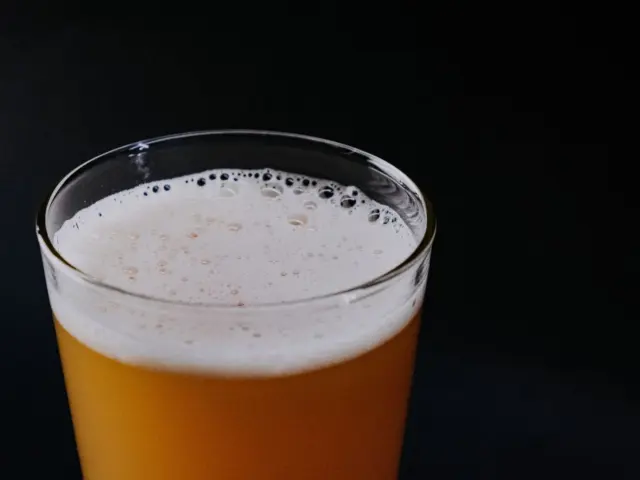
- Look. Notice color, clarity and how the foam sits on top.
- Smell. Give the glass a gentle swirl and take a short sniff. Fruit, grain, spice and roast are all common.
- Sip. Let the beer move across your tongue before you swallow.
- Think. Ask yourself whether it tasted sweet, bitter, sour or dry, and whether the flavor lingered.
- Decide. Say whether you would order a full pour, and write down why in a few words.
A short note on your phone is worth more than you’d expect. Writing “citrusy, dry, would order again” next to a beer name builds your own personal style guide, one that fits your palate rather than a textbook. For a deeper walk through the process, see the guide on how to taste beer.
Why small pours help beginners
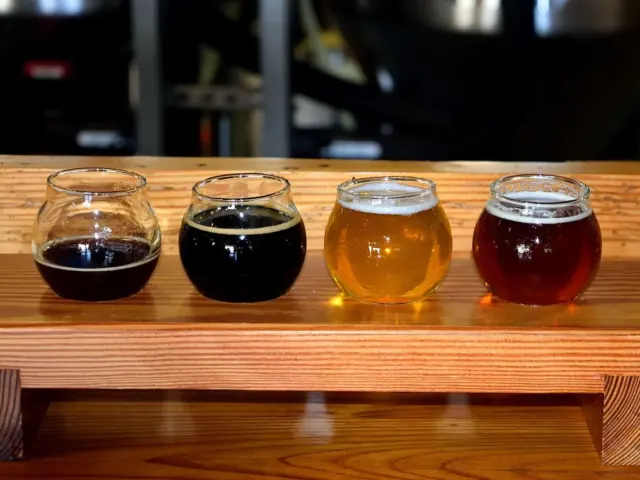
A flight is the easiest way to compare styles side by side, because you taste them back to back instead of relying on memory. It also lowers the risk of committing to a full glass of something you end up not liking. If a flight is new to you, read beer flight what is it before you order one.
When you build a flight, mix the directions instead of ordering four versions of the same thing. A hoppy beer, a lager, something dark and something sour will teach you far more than a row of similar IPAs. Taste the lightest beers first so a strong flavor doesn’t flatten the delicate ones.
How do you read a tap list and a beer label?
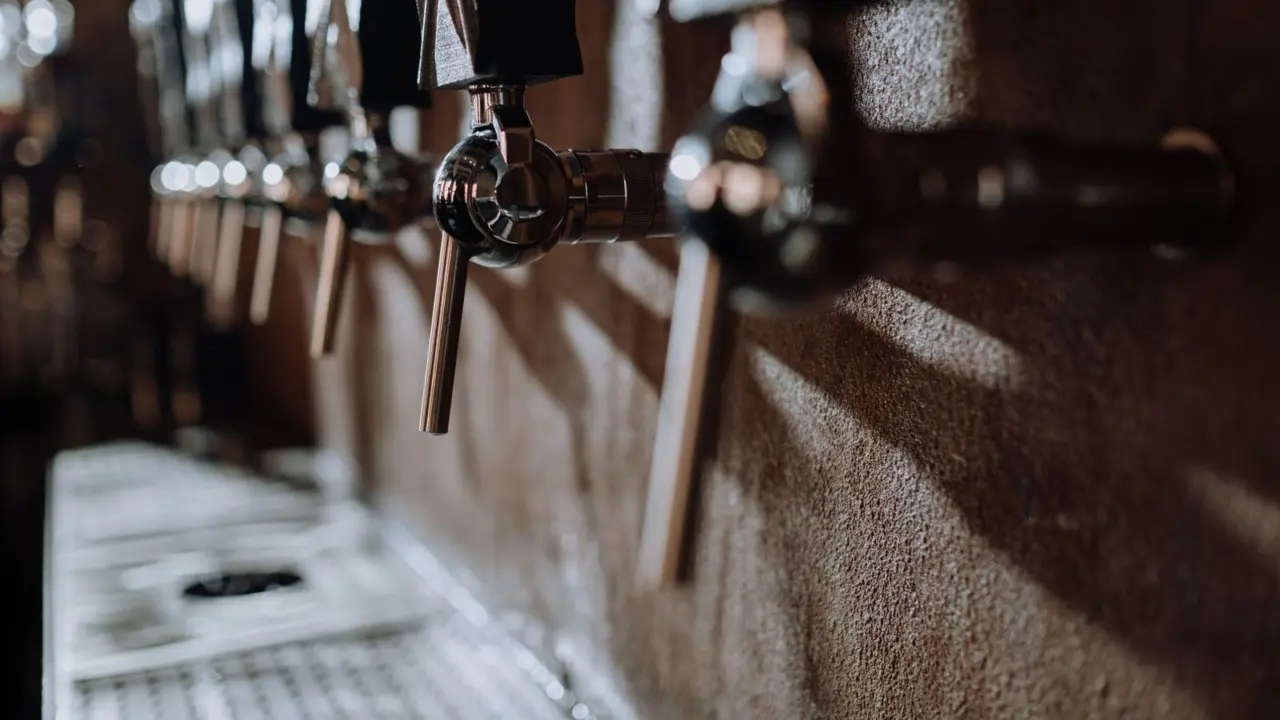
A tap list is a compressed set of clues. Most entries give you a brewery name, a beer name and a style, and many add strength or a short description. Once you know where each clue sits, you can decode a menu in under a minute.
Cans and bottles follow the same logic, only with more fine print. The guide on how to read a beer label walks through what each part tells you. Here is the quick version of what to look for:
- The style line is your best single clue to flavor.
- The brewery name tells you who made it, which helps if you liked another beer from the same place.
- Strength and size tell you how long the glass will last and how much you are committing to.
- Collaboration notes flag a one-off recipe made with another business, which can be worth trying while it lasts.
Collaborations are a good example of what Brooklyn does well. In the CraftBeer.com profile, KCBC brewed a red IPA with Bitter & Esters, a Prospect Heights store where customers brew their own beer, and a hoppy lager with Interboro inspired by a Bushwick taco spot. Names like “Taco Wednesday” tell you the brewers want you to smile before you’ve had a sip.
Questions that get you a better pour
Bar staff are the best resource in the room, and a good question works better than a vague “what’s good?” Try one of these:
- “I like citrusy, bitter beers. What here is close to that?”
- “What is the lightest beer on the list?”
- “Can I try a small taste before I commit?”
- “What would you pair with this snack?”
Describing flavors you already enjoy, such as grapefruit, coffee or sour candy, gives staff something to work with. You don’t have to use style names at all.
Planning a Brooklyn beer night
The best beer nights have a plan that is loose enough to enjoy. Pick a neighborhood, choose a taproom or two, and leave room to wander. The guide to brooklyn breweries is a good companion when you want specific places to start.
The CraftBeer.com profile gives a sense of why neighborhood matters. It describes KCBC as a 5,000 square foot operation with a cozy front taproom, set on Troutman Street by the Jefferson Street L train stop, and says the owners raised $700,000 to start the brewery. A small taproom like that is a very different experience from a big hall, and both are worth trying.
The profile also notes that the three young, award-winning homebrewers behind KCBC called the space “almost like a test kitchen.” That spirit of experimenting is a good mindset for a first visit: order something you can’t pronounce and see what happens.
How to find new beers and events
The Bridge ranked Brooklyn’s 20 craft breweries by their social-media following, noting that social media has become a primary way for fans to discover new brews and events. It is a fair hint that following a few breweries is the quickest way to hear about a new release. It also reported that two Brooklyn-based “nomad” brewers, Grimm Artisanal Ales and Braven Brewing, had plans to open their own brick-and-mortar plants in the borough, which shows how quickly a map of the scene can go out of date. Check opening details yourself before you head out.
Pace yourself and mix it up
- Eat something before or during your tasting.
- Alternate beer with water.
- Share flights so you taste more while drinking less.
- Plan your trip home before you start.
Beer is only part of the nightlife here. If someone in your group would rather have spirits, the brooklyn cocktail guides cover that side of the bar. For the wider scene around the taps, the overview of brooklyn bar culture shows how beer fits in.
Frequently asked questions
What counts as craft beer?
Show answer
There are several definitions in circulation. CraftBeer.com describes itself as fully dedicated to small and independent U.S. breweries, and says it is published by the Brewers Association, a not-for-profit trade group. If a precise definition matters to you, read it on that site directly.
Which beer style should a beginner try first?
Show answer
Start with what you already like in other drinks. If you enjoy citrus and bitterness, try something hoppy. If you prefer something smooth and easygoing, ask for a lighter lager. A small flight will show you quickly which direction suits you.
How many craft breweries are in Brooklyn?
Show answer
The Bridge’s ranking covered 20 craft breweries: Brooklyn Brewery plus 19 that followed it. That list is older and the count may have changed since, so confirm current names and hours before you plan a visit. The guide to Brooklyn breweries is a better starting point for places.
Why is Brooklyn called Kings County in beer stories?
Show answer
Brooklyn is located in Kings County in New York, as the CraftBeer.com profile points out. That profile says KCBC chose its name because calling itself “Brooklyn” anything would be a little too close to Brooklyn Brewery, so the name nods to the location and its history instead.