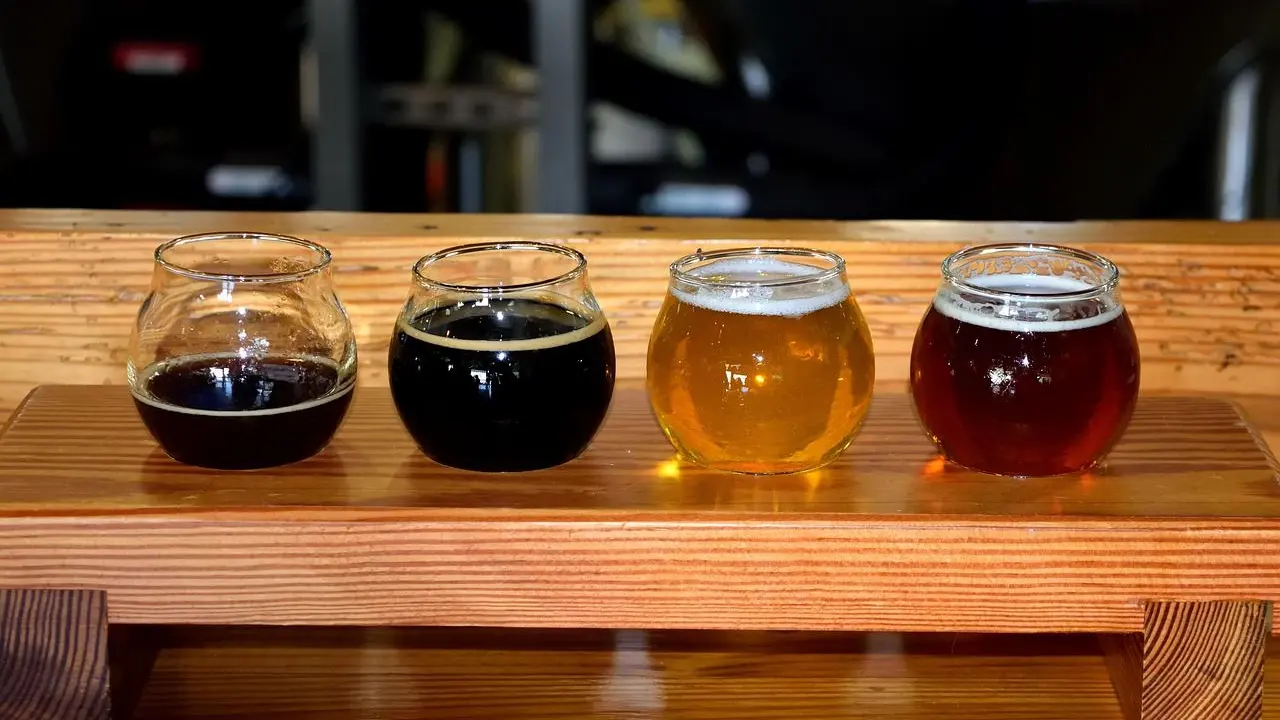
Beer flight what is it? You’re not alone in asking at the bar. It’s a board of small sample pours, a handful of different beers, so you can try several styles before choosing a full pint.
This page is one part of the wider guide to brooklyn craft beer, so keep it handy before your next taproom visit.
| Item | Value |
|---|---|
| Servings in a typical flight | Four to eight |
| Size of each serving | 3 to 5 ounces |
| A U.S. pint | 16 fluid ounces |
| Total if you drank every drop | 12 to 40 ounces |
| One U.S. standard drink | About 14 grams of pure alcohol |
These figures come from Tasting Table and Learning to Homebrew. Pour sizes and counts change from venue to venue, so check the source and the menu before you rely on them.
What a beer flight is and how it arrives
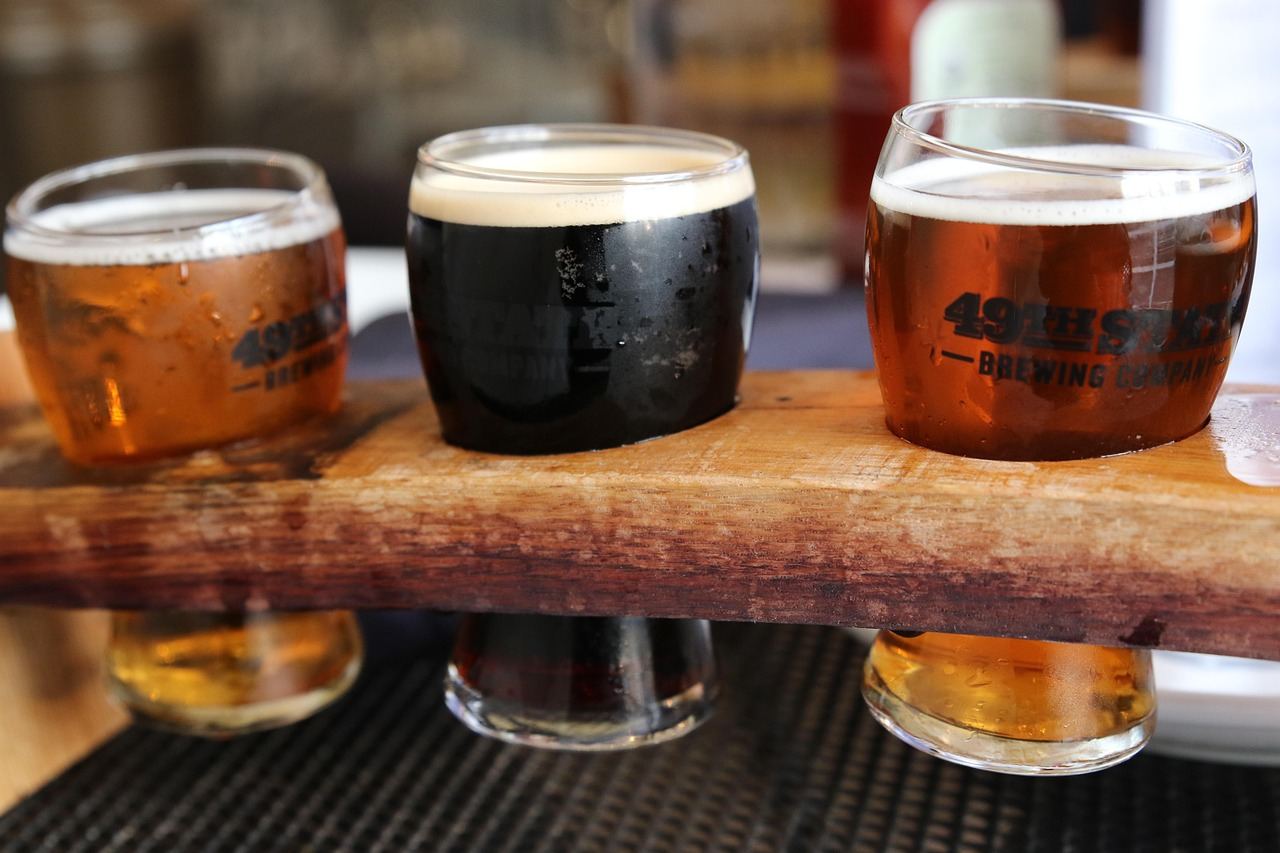
A beer flight is a selection of sample-sized beers, sometimes called a tasting flight. Tasting Table notes that, unlike a single pint, it lets you experience a wider selection without settling on one option.
The glasses usually sit on a wooden paddle, also called a flight board or tasting board, according to Learning to Homebrew. Some places go further and use metal boards instead of wood, as Draft Mag points out.
The board often comes with a card or tags listing each beer. Read them: they tell you what you are about to taste and in what order.
Three kinds of flight you may see
Draft Mag describes three common formats. Knowing them helps you read a menu quickly.
- Horizontal: usually found at brewpubs, with different styles all from one brewery.
- Single-style: usually seen at pubs that pour beers from different breweries, so you compare several versions of one style, such as IPAs or stouts.
- Vertical: the same beer at different stages of aging. It is pretty rare and mostly turns up at beer tasting events.
Because a horizontal flight comes from one brewery, the guide to brooklyn breweries can help you pick where to try one.
How much beer is in a flight?
According to Tasting Table, a typical flight has four to eight servings of 3 to 5 ounces each. Drink every drop and you could consume anywhere from 12 to 40 ounces, against a pint of 16 fluid ounces in the U.S.
A certified Cicerone quoted by Chowhound calls four 4-ounce pours the sweet spot because it adds up to a single pint. That keeps a flight digestible for one person.
Small glasses can still hold strong beer. Vietcetera says mainstream lagers sit at about 5% alcohol by volume, while craft beers well above 10% are not uncommon.
Learning to Homebrew puts a number on it. By its worked example, four 4-ounce pours at 5% come to about one standard drink, while four at 8% come to closer to 1.6. It adds a plain reminder: do not drive if you have been drinking or feel impaired.
There is no universal pour size. The same source says to ask the menu or bartender.
How to order a beer flight
Ordering is easier than the board makes it look. Work through these steps:
- Study the beer menu before you reach the bar, so you can share your picks with the bartender, as Tasting Table advises. Some businesses offer fixed tasters instead of letting you choose.
- Ask whether the flight is fixed, style-themed or choose-your-own, and what the pour size is, as Learning to Homebrew suggests.
- Describe what you like in terms of flavors rather than styles. Tasting Table recommends this for people who aren’t well-versed in beer terminology.
- Mix at least one safe pick you’ll likely enjoy with one or two new styles, per Learning to Homebrew.
- Tell the bartender any limits that matter, such as hop-forward only or a cap on alcohol strength.
Choose a flight when you want information and a pint when you already know the beer. If a full pour is too big later, Tasting Table suggests asking whether the brewery can do a half-pour.
What order should you drink a flight in?
The usual rule is lightest to strongest. Tasting Table says robust beers tend to carpet bomb the palate, and Draft Mag notes that boards are usually arranged that way already.
A bar owner and certified cicerone quoted by The Takeout explains why: stronger flavors fatigue the palate and distort everything that follows. If you jump categories or intensity, he says a palate cleanser is advised.
Slow down and use your nose. Learning to Homebrew suggests swirling gently, smelling before the first sip, then sipping rather than chugging, with a rinse of water between intense beers. If you’d like to go deeper on aroma and flavor, the guide on how to taste beer picks up from here.
If your board holds a radler, sour or gose, group them together. A Cicerone quoted by Chowhound says those styles tend to be bright, fruited and acidic, and can dominate the palate.
You don’t have to finish everything. Tasting Table says it’s completely fine to abandon a taster you don’t like, and that a flight is not a vehicle to get people smashed quickly.
Building a flight that suits you
When you pick your own, think about contrast and a little curiosity. These habits come from the bartenders and brewers quoted in the sources:
- Talk about taste first. Tasting Table says it’s worth asking about taste preferences, since a bar’s most unusual beer won’t suit everyone.
- Choose beers with contrasting flavors, so a dry, bitter beer sits beside a sweeter one.
- Include one unfamiliar beer, as long as it doesn’t clash with what you like.
- Start with something widely appealing if you are new. A brewmaster quoted by Chowhound suggests at least one beer that’s widely appealing, then more complex styles.
- Put the strongest beer last, as Learning to Homebrew advises.
Frequently asked questions
Is a tasting flight the same as a beer flight?
Show answer
Yes. Tasting Table says a beer flight is sometimes called a tasting flight.
How big is each glass in a flight?
Show answer
Each serving is typically 3 to 5 ounces, depending on the brewery, according to Tasting Table. There is no universal size, so ask the bartender.
Do I have to finish every beer?
Show answer
No. It’s completely fine to leave a taster you don’t like. The point is to find what deserves a full pint.
Does a flight contain less alcohol than a pint?
Show answer
Not always. In the Learning to Homebrew example, four 4-ounce pours at 8% come to about 1.6 standard drinks, so check the strength on the tags.