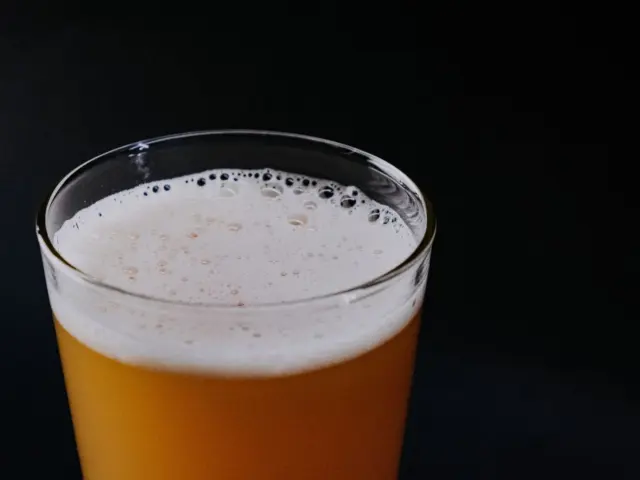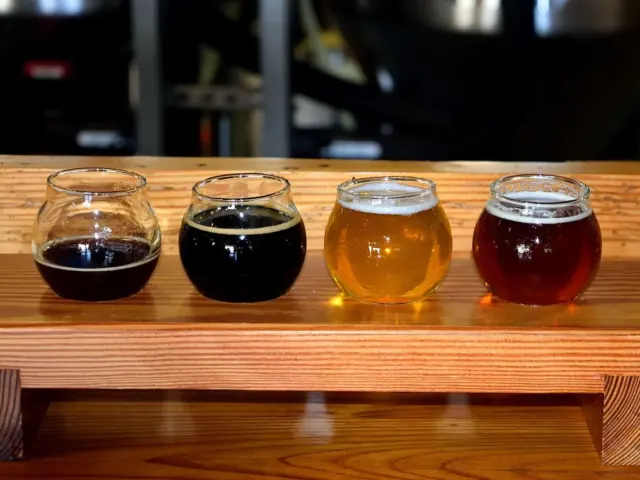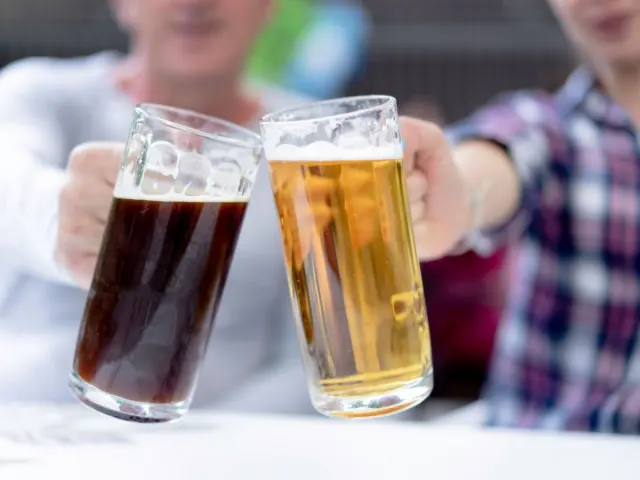
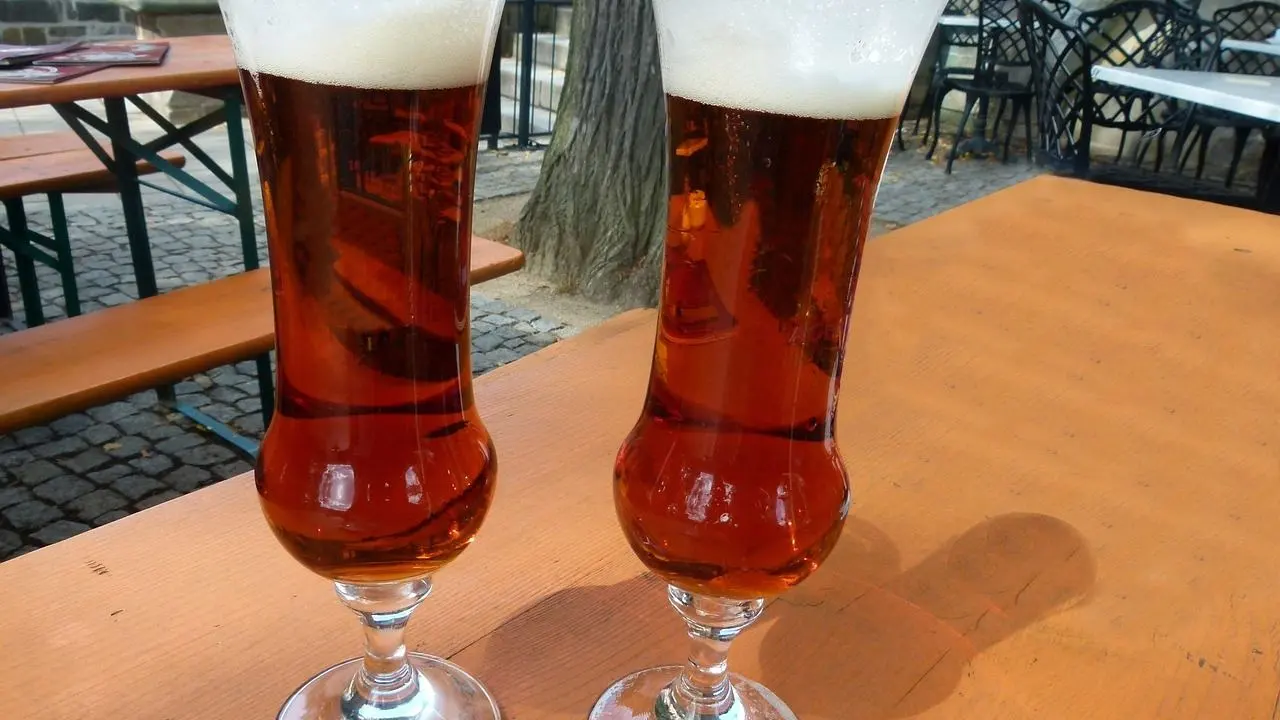
Staring at a tap list and wondering about ipa vs pale ale? The short answer: an IPA is hoppier, more bitter and stronger, while a pale ale is more balanced and easier to drink. Both share the same pale, hop-forward roots.
This guide sits inside the wider world of brooklyn craft beer, so use it to read any Brooklyn tap list with more confidence.
| Item | Value (BJCP 2021 style range) |
|---|---|
| American pale ale bitterness | 30 – 50 IBU |
| American IPA bitterness | 40 – 70 IBU |
| American pale ale strength | 4.5% – 6.2% ABV |
| American IPA strength | 5.5% – 7.5% ABV |
| American pale ale color | 5 – 10 SRM |
| American IPA color | 6 – 14 SRM |
These ranges come from the Beer Judge Certification Program style pages for American Pale Ale and American IPA. Guidelines get revised and individual beers vary, so check the source before you rely on the figures.
The short version: what separates the two
The gap between these beers is a matter of degree, not a different recipe. The BJCP guidelines describe an American IPA as stronger and more highly hopped than an American pale ale, and nearly every other difference follows from that.
Here is how the two usually compare in the glass:
- Hops: a pale ale shows a clear hop presence, while an IPA pushes hop aroma and flavor to the front.
- Bitterness: a pale ale is moderately bitter, while an IPA is decidedly bitter.
- Strength: an IPA is usually the stronger beer.
- Balance: a pale ale keeps more supporting malt, which makes it easier to drink pint after pint.
- Look: both are pale gold to amber, and an IPA may carry a light haze.
If you have only ever ordered one of them, the other will feel familiar. The step from pale ale to IPA is a turn of the dial rather than a leap.
Bitterness, strength and color compared
In the BJCP 2021 guidelines, an American pale ale runs 30 – 50 IBU and 4.5% – 6.2% ABV. An American IPA runs 40 – 70 IBU and 5.5% – 7.5% ABV, according to the pale ale entry and the IPA entry.
Notice the overlap. A bitter pale ale and a gentle IPA can land in the same neighborhood, which is why a menu label alone does not always tell you what is in the glass.
The gravity ranges overlap in the same way. The BJCP lists 1.045 – 1.060 OG for American pale ale and 1.056 – 1.070 OG for American IPA. The pale ale entry even says that modern American versions are often just lower gravity IPAs.
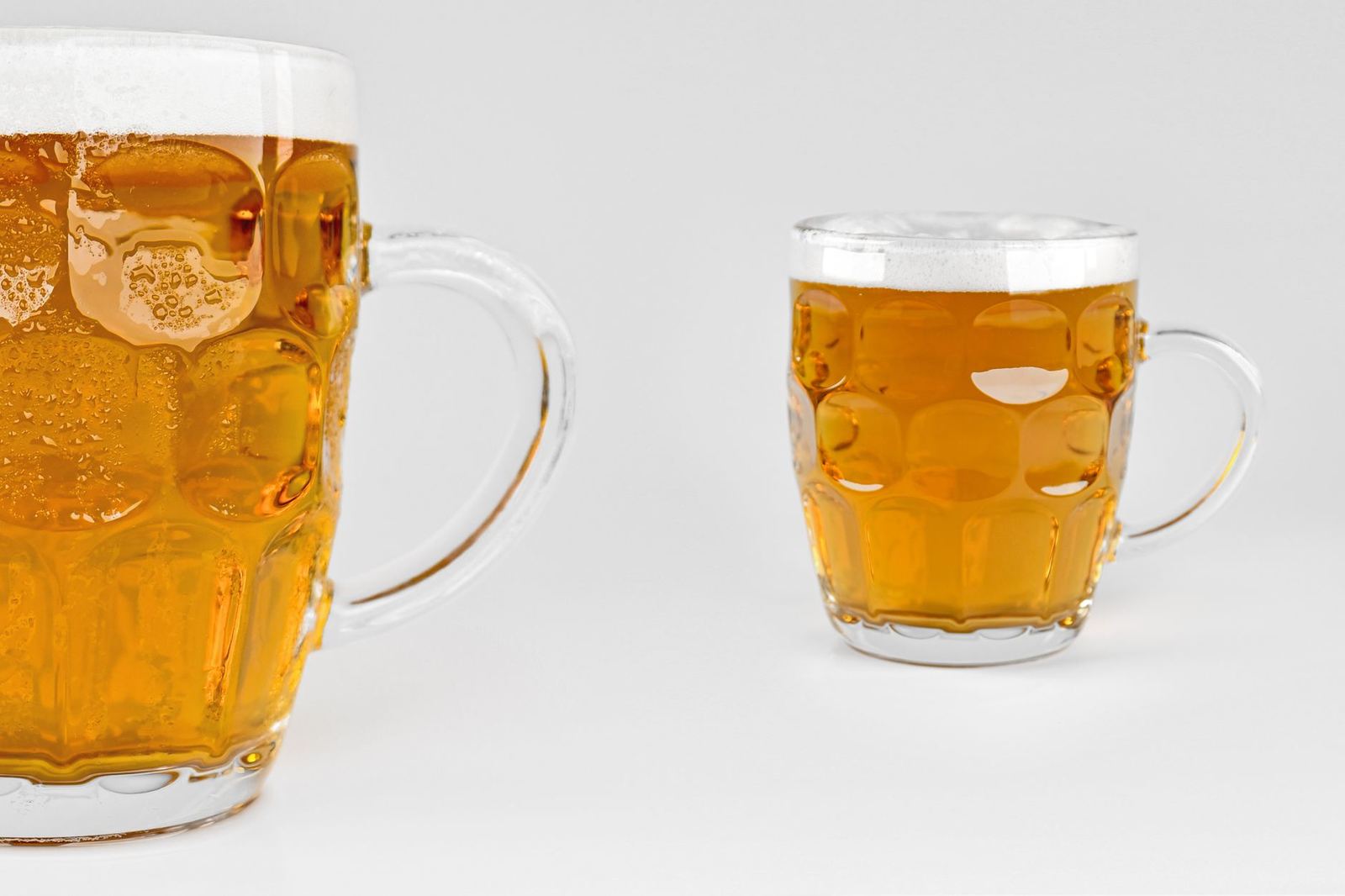
Color is the least useful clue. Pale ale spans pale golden to amber, while IPA spans medium gold to light reddish-amber, so you cannot reliably tell them apart by eye.
Hop aroma and flavor
Hops are where the two styles really part ways. A pale ale should have a moderate to moderately-high hop aroma, while an IPA is described as having a prominent to intense hop aroma.
Both styles often lean on American or New World hops. The BJCP lists these typical characteristics:
- citrus and floral notes
- pine and resin
- spice
- tropical fruit, stone fruit, berry or melon
Cascade is the hop most tied to the story. A Craft Beer & Brewing style guide credits Sierra Nevada’s early pale ale with relying on Cascade hops, which bring a signature grapefruit-like aroma and flavor.
Malt plays a supporting role in both. In a pale ale the balance is typically toward the late hops and bitterness, but the malt should be supportive, not distracting. In an IPA the malt is low to medium-low, clean and grainy, so the hops carry the beer.
The finish differs slightly too. A pale ale finishes medium to dry, and an IPA finishes dry to medium-dry with a hoppy, bitter aftertaste (BJCP). Expect an IPA to linger longer on your tongue.
Where each style came from
Both styles trace back to English pale ale, which Craft Beer & Brewing notes was shipped to India in large quantities by British brewers. The modern American versions are craft-era adaptations of that tradition, built on local ingredients (Craft Beer & Brewing).
The BJCP says Sierra Nevada Pale Ale was first made in 1980 and helped popularize the American pale ale (BJCP). For IPA, the first modern American craft example is generally believed to be Anchor Liberty Ale, first brewed in 1975 using whole Cascade hops (BJCP).
The name itself is a little misleading. The BJCP deliberately does not spell out “IPA” as India Pale Ale, because none of these beers historically went to India, and many are not pale (BJCP Category 21).
If you are curious about the local side of beer culture, the history of brewing in brooklyn is a good companion read.
Neighboring styles worth knowing
A few related beers sit near these two on the menu, and knowing them helps you place what you are drinking.
- Blonde ale: the BJCP says American pale ale is more bitter and hoppy than a blonde ale, so a blonde is the softer starting point.
- Session IPA: maltier, more balanced and less intensely hop-focused than a full-strength IPA, and closer in spirit to a pale ale.
- Double IPA: the stronger sibling, which keeps a similar balance to an IPA with more alcohol.
- West Coast IPA: a dry, sharply bitter, clear type of American IPA, not a separate style.
- English pale ale and bitter: more balanced between malt and hops, where American pale ales lean toward the hops.
All of these are ales, which the BJCP tags as top-fermented. If that term is new to you, the lager vs ale comparison explains what separates the two big beer families.
How to choose at the bar
You do not need a beer degree to order well. A few quick steps will get you the glass you actually want.
- Decide how much bitterness you enjoy. If you are unsure, start with a pale ale.
- Check the ABV on the menu or can. A higher number usually points to a bigger, hoppier IPA.
- Ask what hops are used and whether the beer is dry-hopped. That tells you how loud the aroma will be.
- Ask for a small pour of each style and compare them side by side.
- If you liked the IPA, try a Double IPA next. If it was too much, go back to pale ale or a session IPA.
Fresh beer matters as much as style. Hop aroma is the first thing to fade, so a fresh pale ale will often beat a tired IPA.
Frequently asked questions
Is a pale ale just a weaker IPA?
Show answer
Often, yes. The BJCP notes that modern American versions are often just lower gravity IPAs, although the style traditionally allowed experimentation with hop varieties (BJCP).
Which is more bitter, IPA or pale ale?
Show answer
IPA. The BJCP describes pale ale bitterness as moderate to high and IPA bitterness as medium-high to very high (BJCP).
Does IPA really stand for India Pale Ale?
Show answer
Historically yes, but the BJCP avoids spelling it out because none of the modern American beers in the category went to India. Today “IPA” describes a balance of strong hop character and clean malt rather than a journey (BJCP Category 21).
Which one has more alcohol?
Show answer
An IPA usually does. The BJCP range is 5.5% – 7.5% ABV for American IPA and 4.5% – 6.2% ABV for American pale ale, so there is some overlap.
Is an IPA always hazy?
Show answer
No. The BJCP describes American IPA as clear, with a light haze allowable, and notes that dry, sharply bitter, clear examples are sometimes called West Coast IPA (BJCP).