Stuck between neat, up and rocks when the bartender looks at you? This bar terms glossary gives you the answer: neat is unchilled with no ice, up is chilled and strained, rocks is over ice.
This glossary sits within the wider topic of brooklyn bar culture, so keep it handy before your next round.
| Term | Meaning or value |
|---|---|
| Neat | Unchilled liquor with no water, ice or mixer |
| Up | Chilled with ice, strained, served without ice in a stemmed glass |
| Pony | 1 US fluid ounce (30 ml) |
| Standard US shot | 1.5 US fluid ounces (44 ml) |
| One finger (proposed standard) | About 1 ounce, or 3/4 inch in a standard glass |
The figures come from Wikipedia’s bartending terminology page and a Westword bartender Q&A. Definitions and pour sizes differ from bar to bar and can change, so check the source before you rely on them.
Neat, up and straight: the terms people mix up most
A drink served neat is a single, unmixed liquor served without being chilled and without any water, ice or other mixer, according to Wikipedia. Mental Floss says the word seems to have arisen for spirits in the early 1800s, though it was used for unadulterated wine from the late 16th century onwards.
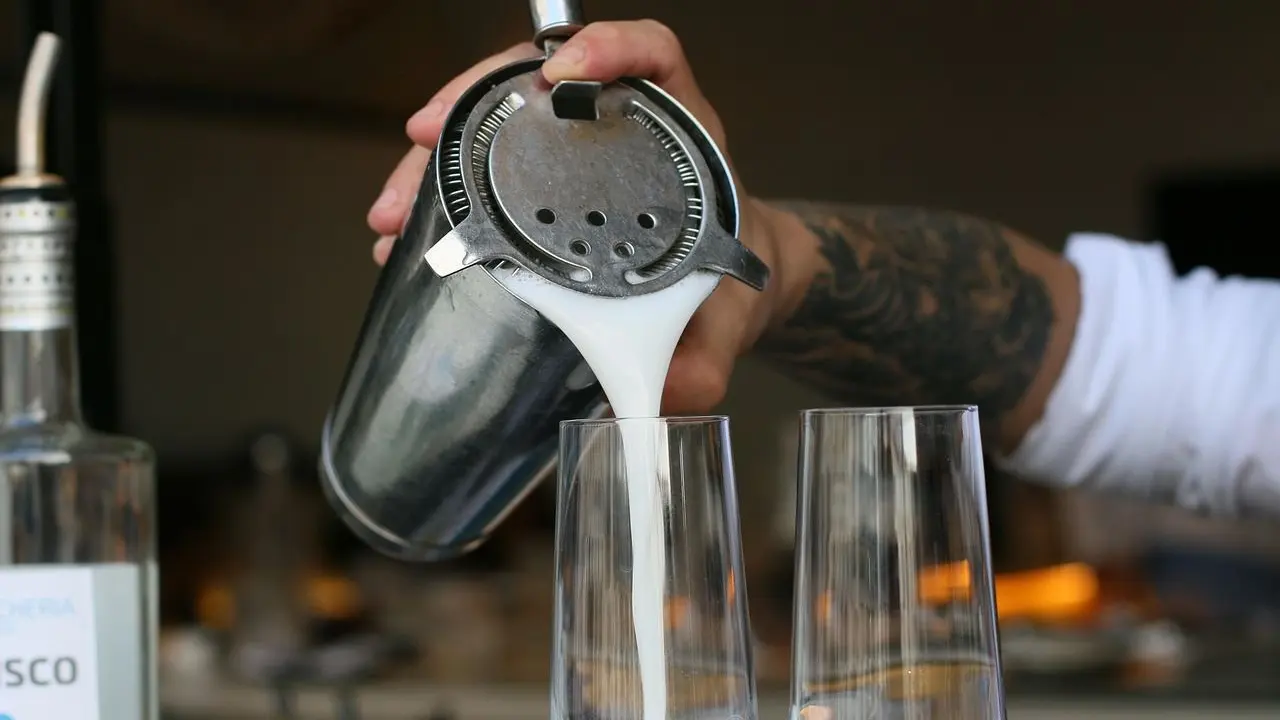
A drink served up is shaken or stirred with ice, then strained and served in a stemmed glass without ice, Wikipedia explains. Mental Floss says the origins date back to 1874 but are murky, and that the stem is the likely link.
Mental Floss also calls up and neat two of the most confused terms in the bartending world. Two more words add to the muddle:
- Straight usually means a single, unmixed liquor with no water, ice or mixer, and it can sometimes stand in for either neat or straight up, per Wikipedia.
- Straight up is treated by Wikipedia as the same as up, while Backbar’s bar lingo guide describes it as a drink shaken in a shaker and strained into a glass.
- Straight on a label is a different matter: it is a term of art for a type of US whiskey, and United States federal law defines the term, says Wikipedia.
The practical fix is to say what you want in plain words. In a Westword Q&A, a reader asked for vodka up with a twist and received it unchilled, in a tumbler, which shows why a quick “chilled, no ice” helps.
On the rocks, chasers and picklebacks
On the rocks refers to liquor poured over ice cubes, per Wikipedia. Mental Floss adds that the order gets you a bar’s standard pour (often 1.25, 1.5, or 2 oz) of straight spirit over ice in a rocks glass.
Where the phrase comes from is disputed. Some Scotch whisky companies have said it comes from chilling drinks with rocks cooled in a river, but Mental Floss calls that story probably false and says a likelier source is ice cubes being chipped off a larger block.
A chaser is a usually non-alcoholic drink consumed immediately after a shot or a sip of a stronger alcohol, according to Wikipedia. Mental Floss says the word has been used in English since about 1800 and can mean beer, water, soda or pickle brine.
That last one has its own name. A pickleback is a shot of liquor chased by a shot of pickle brine, and Wikipedia calls it a relatively new type of chaser.
Bar terms for pour sizes: shot, pony, double and finger
Sizes are where bar terms get slippery. Wikipedia gives these US figures, while the Westword bartender notes that liquid measures may vary at individual bars:
- Pony: slang for one US fluid ounce (30 ml) of spirit, per Wikipedia.
- Shot: the standard US shot is 1.5 US fluid ounces (44 ml), per Wikipedia.
- Standard pour: Westword says most bars have a standard pour of 1.25 to 1.5 ounces.
- Double: three US fluid ounces (89 ml) on Wikipedia, but 2.5 ounces in the Westword glossary.
- Jigger: the hourglass-shaped measuring device, per Backbar.
The finger is the oldest measure on the list. Westword says ordering by the digit began in American saloons in the Old West (1830s to 1920), and it faded because different bartenders have different-sized fingers.
A Westword bartender describes an effort to standardize the finger pour at 3/4 of an inch per finger in a standard old fashioned glass, which equals about one ounce per finger. In that piece, dated November 1, 2010, he said this was not yet generally accepted, and Mental Floss notes that many bars have abandoned the measure entirely.
Martini and garnish words: dry, dirty, wet and twist
Martini orders pack a lot into one word. These are the ones you will hear most:
- Dry: less vermouth added to a martini, per Backbar.
- Extra dry: only a wash (rinsing a glass with spirit) or a bar spoon of vermouth, per Westword.
- Wet: more vermouth than normal, per Backbar.
- Dirty: olive brine added to a martini, per Westword.
- Perfect: the vermouth is split into equal parts sweet and dry, usually for martinis and manhattans, per Westword.
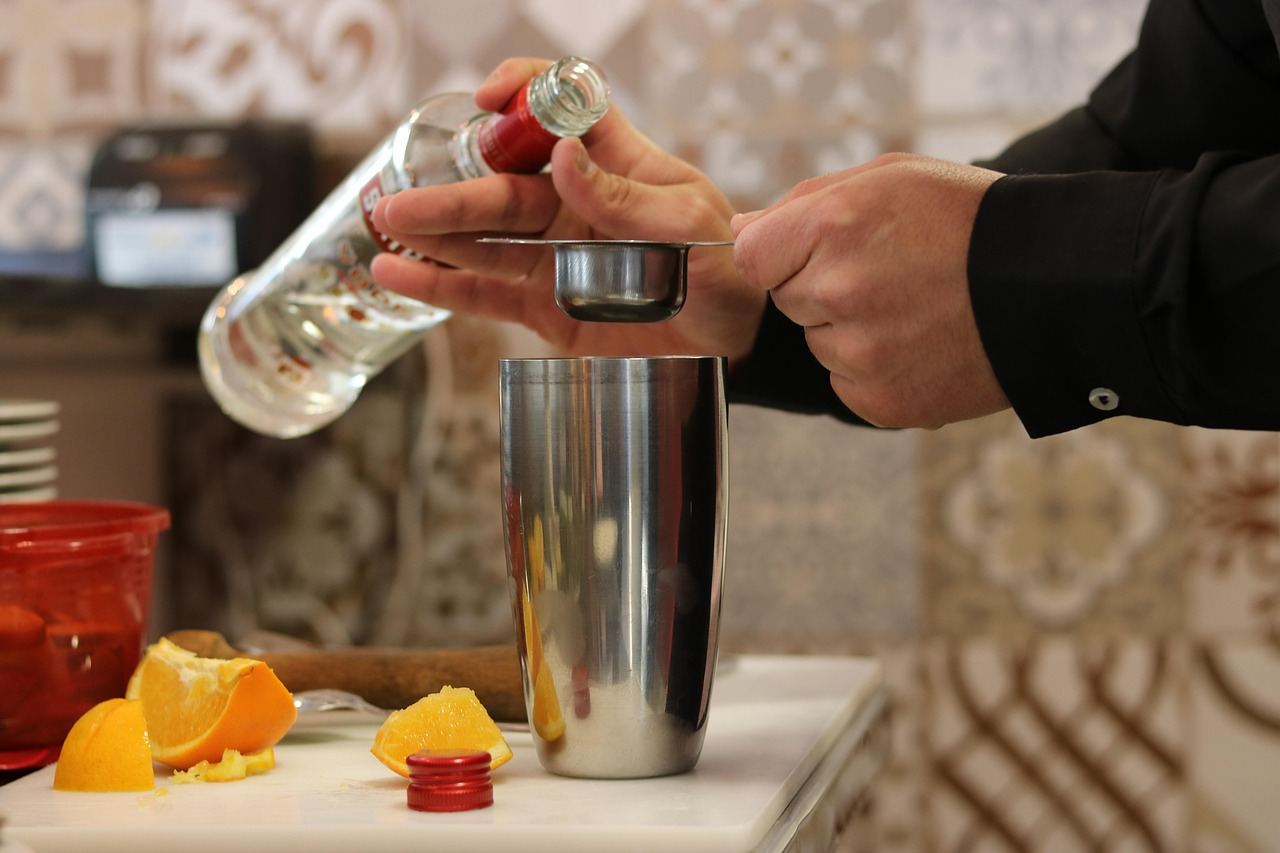
A twist is a swath of citrus peel, twisted to express the oils over a cocktail, according to Westword. It is one kind of garnish, which Backbar defines as something added to a drink after it is made to enhance the presentation.
Backbar also covers a few technique words you may hear from the other side of the bar:
- Muddle: to crush ingredients with a tool called a muddler.
- Rim: to wet the rim of the glass and press it into salt or sugar.
- Free pour: making drinks without a measuring device.
Menu and bar-room words: well, call, top-shelf and 86
A well drink uses the lower-cost liquors, and neither the liquor brand nor the mixer brand is named, per Backbar. A call drink is the opposite: the customer names the brand of liquor, says Wikipedia.
Top-shelf bottles are the most expensive and considered the best, per Backbar. Wikipedia explains that the names come from bottle positions: the cheapest spirit sits in a long rail within a busy bartender’s reach, while pricier bottles are displayed on shelves behind the bar.
Menu wording changes with the clock, so it helps to know what is happy hour before you order. The same goes for the setting: you can read about what is a dive bar to see how a no-frills local fits into all this.
The number 86 is the best-known piece of staff slang. Mental Floss says a bartender who runs out of something, or wants to get rid of it, may tell the barstaff to 86 it, and a bartender can 86 a customer who has had too much by kicking them out.
The origin is murky. Mental Floss says its use in the restaurant industry supposedly dates back to the 1930s, and one story ties it to Prohibition-era raids at a bar called Chumley’s at 86 Bedford Ave in New York City.
- Behind the stick: working behind the bar doing the actual bartending rather than managerial tasks, per Mental Floss.
- Last call: the last opportunity to buy drinks before the bar closes for the night, per Backbar.
How do you order a drink so the bartender gets it right?
Follow this order and most mix-ups disappear:
- Name the spirit, and the brand if you want a call drink instead of the well.
- Say how it should be served: neat, up or on the rocks.
- Add any martini or garnish detail, such as dry, dirty or with a twist.
- If a word has two meanings, such as straight up, add a plain phrase like “chilled, no ice”.
Frequently asked questions
What is the difference between neat and up?
Show answer
Neat means the liquor is poured and served unchilled, without ice or a mixer. Up means the drink is chilled by shaking or stirring with ice, then strained into a stemmed glass without ice. Backbar notes that both come without ice, but a neat drink is room temperature.
Is straight up the same as up?
Show answer
Wikipedia says the terms ordinarily mean the same thing, while Backbar describes straight up as shaken and strained into a glass. Wikipedia adds that some clarification may be needed, so say whether you want it chilled.
How much is a finger of whiskey?
Show answer
There is no fixed answer. A proposed standard makes it about one ounce, or 3/4 of an inch in a standard old fashioned glass, but Westword said in its November 1, 2010 piece that this was not yet generally accepted.
What does it mean when a bartender 86s something?
Show answer
It means the item is out or unwanted. Mental Floss says a bartender can also 86 a customer who has had too much by kicking them out.
What is a pickleback?
Show answer
It is a shot of liquor chased by a shot of pickle brine. Wikipedia describes it as a relatively new type of chaser.