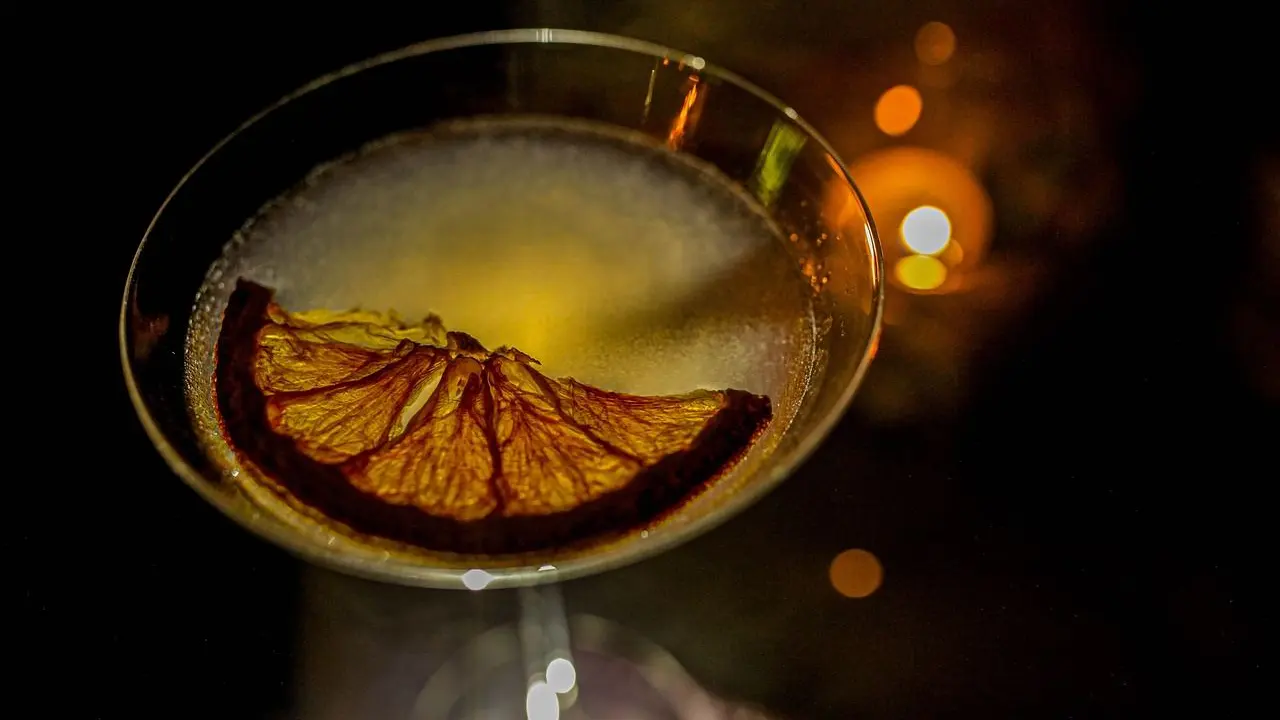
Want a rye cocktail that’s bold but easy to build? This red hook cocktail recipe needs just rye, Punt e Mes and maraschino liqueur: stir 2 oz, 1/2 oz and 1/2 oz with ice, then strain into a coupe.
The Red Hook is one more brooklyn cocktail worth knowing, and this page covers its pours, method and background.
| Item | Value |
|---|---|
| Rye whiskey | 2 oz (60 ml) |
| Punt e Mes | 1/2 oz (15 ml) |
| Maraschino liqueur | 1/2 oz (15 ml) |
| Method and glass | Stir with ice, strain into a coupe |
| Creator | Vincenzo Errico, Milk & Honey, New York City |
| Year created | 2003 per Imbibe; 2004 per the Oxford Companion |
These figures come from Imbibe and The Oxford Companion to Spirits & Cocktails. Recipes and dates can change or be revised, so check the source before you rely on them.
Red Hook cocktail ingredients
The Red Hook is a short, stirred rye cocktail with a bittersweet edge. Imbibe gives 2 oz rye whiskey, 1/2 oz Punt e Mes and 1/2 oz maraschino liqueur. The Oxford Companion lists the same drink in metric as 60 ml, 15 ml and 15 ml.
- Rye whiskey: 2 oz (60 ml), the base of the drink.
- Punt e Mes: 1/2 oz (15 ml), the vermouth and bitter element in one bottle.
- Maraschino liqueur: 1/2 oz (15 ml), which adds sweetness.
- Ice: for stirring, in a mixing glass.
- Glass: a coupe.
- Optional garnish: a maraschino cherry.
The only flexible pour is the maraschino liqueur. Punch calls for 1/4 to 1/2 oz, to taste, and says the liqueur sweetens the drink. If you want less sweetness, pour closer to 1/4 oz.
For gear, Imbibe lists a mixing glass, a barspoon and a strainer. You do not need a shaker, because the drink is stirred. Chill the coupe before you start so the finished drink stays cold longer.
How to mix a Red Hook
The method is the same in every source you can check: stir everything with ice, then strain. Punch puts it in three plain steps, and Imbibe adds that the coupe should be chilled.
- Chill a coupe glass.
- Add the rye whiskey, Punt e Mes and maraschino liqueur to a mixing glass.
- Add ice and stir with a barspoon until the drink is chilled.
- Strain into the chilled coupe.
- Add a maraschino cherry if you want a garnish.
Garnish is the one point where sources differ. The Oxford Companion adds a maraschino cherry, while the Imbibe and Punch recipes list none, so treat the cherry as your call.
Stirring matters here because every ingredient is a spirit or a liqueur. Stirring chills and dilutes the drink without clouding it, which suits a cocktail meant to taste savory and strong, as Punch tags it.
Where the Red Hook comes from
The drink was created by bartender Vincenzo Errico at the New York City bar Milk & Honey. Imbibe dates it to 2003, while the Oxford Companion says 2004. Punch credits the same bartender as Enzo Errico, so you may see either first name.
The name points to a place. Imbibe says the Red Hook takes its name from the south Brooklyn neighborhood, a 19th-century industrial shipping port. Errico told Imbibe that a fellow Italian neighbor in Brooklyn suggested the name.
He also described what he was after. In his words: “I was an Italian bartender working in Manhattan making a twist between the Brooklyn and Manhattan cocktail.” That is exactly how Punch frames the drink, as a boozy cross between the two.
Errico says rye drinkers had few options at the time, and the drink spread by word of mouth. Punch calls it one of the more enduring modern riffs on the Manhattan and Brooklyn.
Why Punt e Mes defines the drink
The key swap is the vermouth. Imbibe explains that Errico replaced the Manhattan’s traditional sweet vermouth with Punt e Mes and added maraschino liqueur alongside it.
The inspiration was practical: a new Italian vermouth had become available behind the bar. The Piedmontese name means point and a half, which refers to sweet vermouth with a smaller part of bitter amaro.
The Oxford Companion notes that the Punt e Mes plays the role of both vermouth and bittering component. That is why the recipe has no bitters. Punch describes the bottle as a subtly bitter Italian vermouth.
Because every source names Punt e Mes, the bottle is worth finding before you plan a batch. Rye and maraschino liqueur are the supporting parts, so the vermouth decides how the drink tastes.
Red Hook, Manhattan and Brooklyn compared
The Red Hook sits between two older New York drinks. Imbibe describes the Brooklyn as rye whiskey, dry vermouth, maraschino liqueur and Amer Picon, and our brooklyn cocktail recipe walks through that classic if you want to taste the original side by side.
- Manhattan: the source of inspiration, built on traditional sweet vermouth.
- Brooklyn: rye whiskey, dry vermouth, maraschino liqueur and Amer Picon.
- Red Hook: rye whiskey, Punt e Mes and maraschino liqueur.
The Red Hook also started a family. The Oxford Companion lists the Bensonhurst, the Bushwick, the Carroll Gardens, the Cobble Hill, the Greenpoint, the Little Italy and the Slope as rye drinks it inspired. If you want another neighborhood drink to try next, the greenpoint cocktail recipe is a natural step.
Imbibe adds the Longshoreman, Abigail Gullo’s rye, Punt e Mes and Averna drink, which it calls a riff on a riff. The Oxford Companion goes further and says the Red Hook helped usher in a renaissance of stirred aromatic cocktails in general.
Frequently asked questions
What is in a Red Hook cocktail?
Show answer
It contains rye whiskey, Punt e Mes and maraschino liqueur. Imbibe lists 2 oz, 1/2 oz and 1/2 oz respectively, stirred with ice and served in a coupe.
Should a Red Hook be shaken or stirred?
Show answer
Stirred. Punch, Imbibe and the Oxford Companion all describe stirring the ingredients with ice and then straining.
What glass do you serve a Red Hook in?
Show answer
A coupe. Imbibe specifies a chilled coupe, and Punch also strains the drink into a coupe glass.
Who invented the Red Hook?
Show answer
Vincenzo Errico created it at Milk & Honey in New York City. Imbibe dates it to 2003 and the Oxford Companion to 2004, so the exact year depends on the source.
Can you change the amount of maraschino liqueur?
Show answer
Yes, within reason. Punch gives a range of 1/4 to 1/2 oz, to taste, while Imbibe and the Oxford Companion use 1/2 oz and 15 ml.