Staring at a menu and wondering about the manhattan vs brooklyn cocktail choice? The Manhattan uses sweet vermouth and bitters; the Brooklyn swaps in dry vermouth and adds maraschino and Amer Picon.
This comparison is part of a wider set of guides on the brooklyn cocktail.
| Item | Value |
|---|---|
| Manhattan base | American whiskey, sweet vermouth and Angostura bitters |
| Brooklyn rye whiskey | 2 ounces |
| Brooklyn dry vermouth | 1/2 ounce |
| Brooklyn maraschino liqueur | 1/4 ounce |
| Brooklyn first found in print | 1908 |
| Red Hook created | 2004 |
The figures come from Punch’s Brooklyn recipe and its history of Brooklyn riffs. Recipes and historical details can change, so check the source before you rely on them.
How the Manhattan and Brooklyn are built
The Manhattan is the famous one. According to Punch’s history of Brooklyn riffs, it is made with American whiskey, sweet vermouth and Angostura bitters. The same piece describes it as basically a lightly altered glass of rye or bourbon, which is why it reads as the simpler drink.
The Brooklyn has more moving parts. Punch’s Brooklyn recipe lists these amounts:
- 2 ounces rye whiskey
- 1/2 ounce dry vermouth
- 1/4 ounce maraschino liqueur
- 1/4 ounce Amer Picon, or Amaro CioCiaro if unavailable
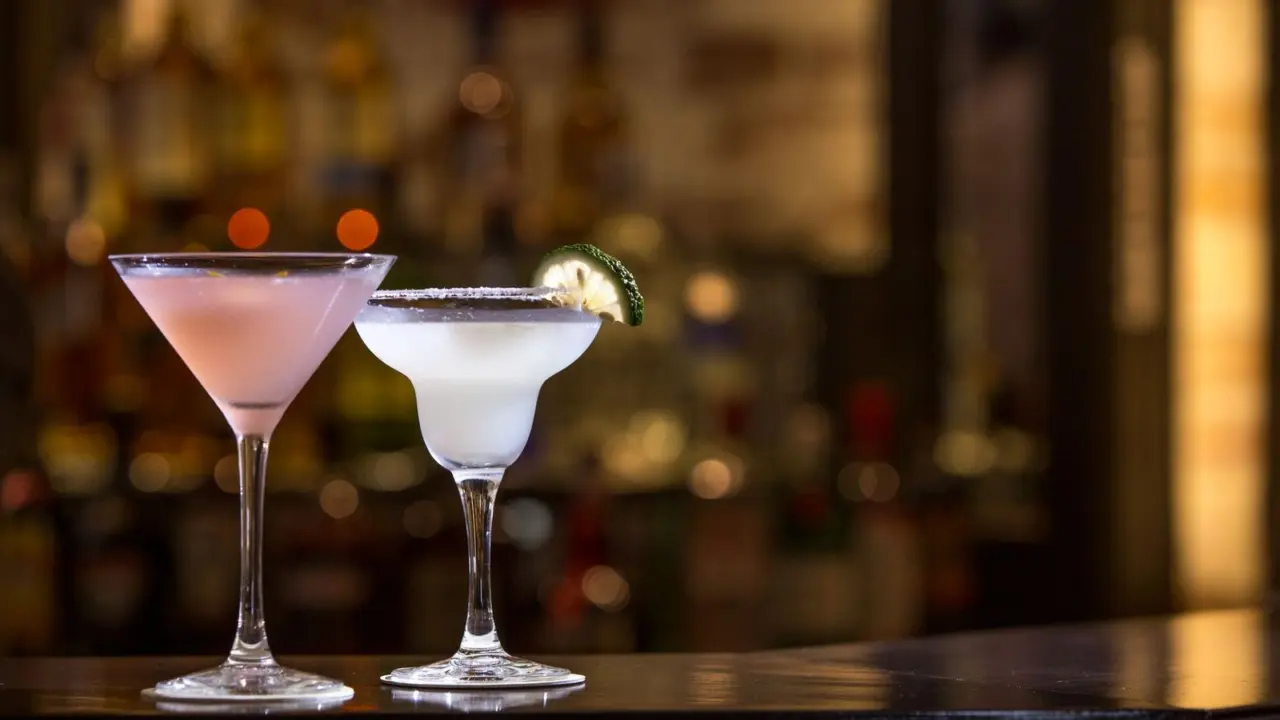
The method is the same stirred approach you would use for a Manhattan: add everything to a mixing glass, add ice, stir until chilled and strain into a coupe glass.
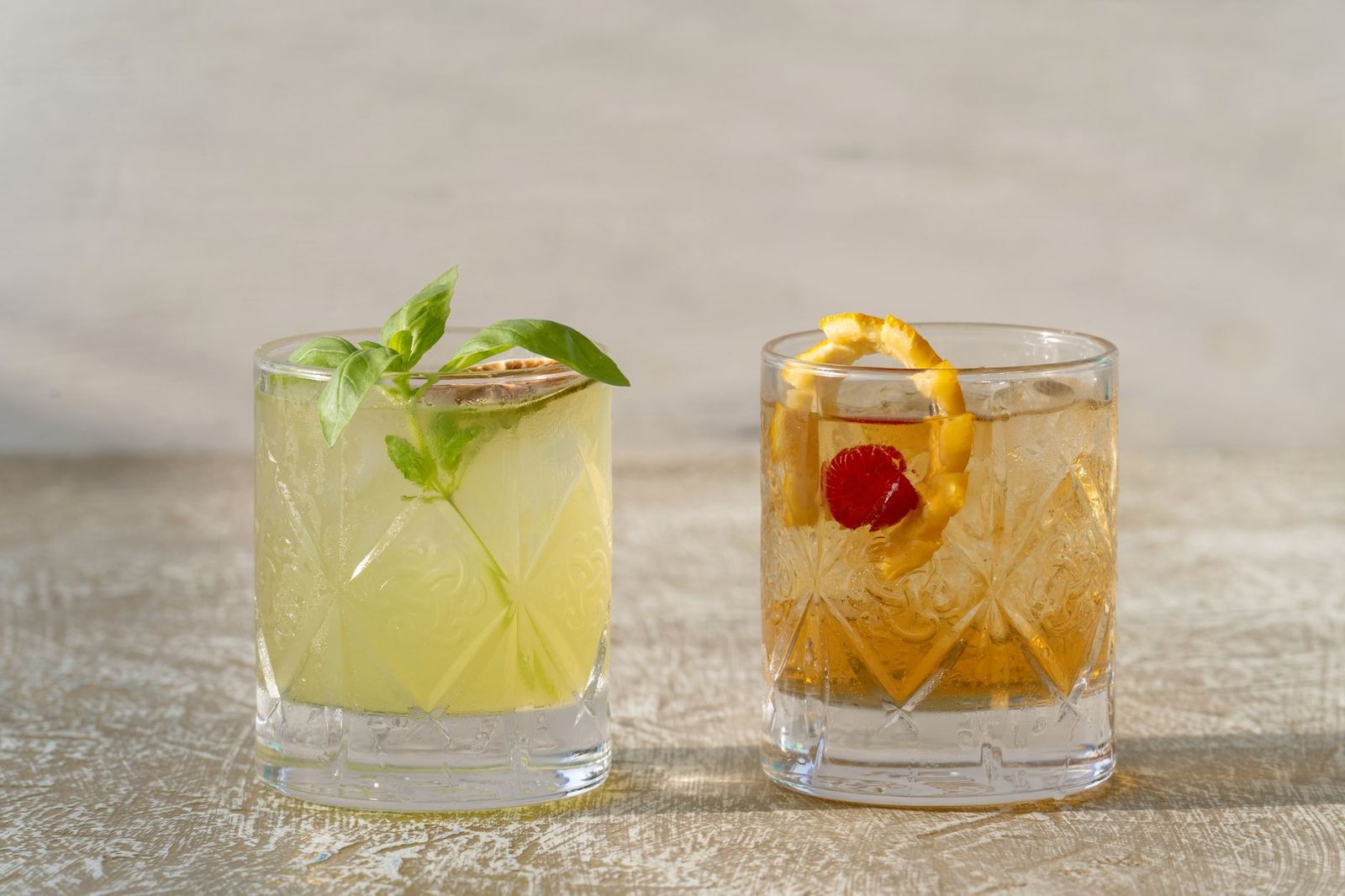
Put side by side, the real differences are in the extras:
- Vermouth: sweet in the Manhattan, dry in the modern Brooklyn.
- Flavoring: Angostura bitters in the Manhattan; maraschino liqueur and a bitter orange liqueur in the Brooklyn.
- Effort: the Brooklyn asks you to track down more bottles, one of them hard to find.
Punch’s recipe page says the Brooklyn drinks like a riff on the Manhattan in flavor profile and composition, which is a fair summary of the relationship (Punch).
Is the Brooklyn really a dry Manhattan?
The book Savoring Gotham, quoted by Punch, puts it bluntly: the Brooklyn is not much more than a dry Manhattan, with dry vermouth replacing the sweet. That description fits the version most bartenders make today.
The history is a little more tangled. The same Punch piece says the Brooklyn was first found in print in 1908 in J.A. Grohusko’s Jack’s Manual. That original recipe called for equal parts rye whiskey and Italian (sweet) vermouth, plus small amounts of maraschino liqueur and Amer Picon, and it was changed to dry vermouth in later iterations.
Writer Peter Suderman covered the mix-up in a January 2022 newsletter. He credits cocktail historian David Wondrich with unearthing the older version and says the Brooklyn many modern bartenders learned was based on a mistakenly transcribed recipe. The pre-Prohibition original actually contained sweet vermouth rather than dry.
So the answer depends on which Brooklyn you mean. The dry-vermouth drink is a dry Manhattan with extra liqueurs, while the historical version keeps the Manhattan’s sweet vermouth and adds the same extras.
Why the Manhattan became the icon
Punch notes that the Manhattan became a mid-century icon while the Brooklyn did not get much play in the decades after its 1908 appearance (Punch). It suggests simplicity and booziness helped the Manhattan, while the Brooklyn calls for two esoteric liqueurs.
Punch’s recipe page adds that the Brooklyn has largely toiled in obscurity since Prohibition (Punch). The main hurdle was Amer Picon, which Punch describes as a French bitter orange liqueur. As of Suderman’s January 2022 newsletter, you could not easily purchase it in the United States.
That is why most home recipes name a stand-in. Here is what the sources suggest:
- Amaro CioCiaro: Punch calls it a fine substitute in its Brooklyn recipe.
- Amaro Lucano: the substitute bartender Phil Ward has recommended, according to Suderman.
- Cynar, Campari or Aperol: they work in a pinch, but Suderman warns they have divergent flavor profiles and make a substantially different drink.
Neighborhood riffs that sit between the two
When the cocktail renaissance ramped up in the early 2000s, bartenders rediscovered the classics, but many ingredients, Amer Picon included, were still impossible to find. Punch’s January 05, 2016 story says some bartenders smuggled bottles in suitcases, while others brewed housemade versions. Others improvised with Italian amari.
That tinkering produced a family of drinks named for Brooklyn neighborhoods, all built on a whiskey, vermouth and modifier template:
- Red Hook: created as a Manhattan-Brooklyn mash-up in 2004 by former Milk & Honey bartender Vincenzo Errico, and the most streamlined of the group because it skips Amer Picon altogether (Punch).
- Greenpoint: created by Michael McIlroy at Milk & Honey in 2006, and described by Punch as a spin on the Brooklyn, itself a twist on the Manhattan.
- Bushwick: offered by Phil Ward at Death & Co. in 2009, the same year as the Cobble Hill.
If the Greenpoint appeals, the greenpoint cocktail recipe guide goes deeper on that drink.
Suderman argues in his newsletter that Ward’s Bushwick works by swapping the dry vermouth of the historically incorrect Brooklyn for sweet vermouth. In his view, many modern neighborhood drinks are better understood as Brooklyn riffs, with four ingredients rather than three and a slightly larger total volume than the three-ounce pre-dilution standard for Manhattans.
Punch also notes that, like the Negroni, the Brooklyn works with myriad variations (Punch). That flexibility is a big reason the drink found its audience.
Which one should you order or make?
Treat this as a question of how much fuss you want. Use these rules of thumb, which follow from the recipes above:
- Choose the Manhattan for a plain, spirit-forward whiskey drink with sweet vermouth and bitters.
- Choose the Brooklyn if you like a dry-vermouth backbone with maraschino and a bitter orange note.
- Choose a neighborhood riff such as the Red Hook if you want something that sits between the two.
At home, the Brooklyn is only as good as your substitute for Amer Picon, so buy the amaro first and taste as you go. If you are building a bar around stirred whiskey drinks, the guide on how to make an old fashioned is a sensible next read.
Frequently asked questions
Is the Brooklyn just a dry Manhattan?
Show answer
Modern versions are close: Savoring Gotham, quoted by Punch, calls it not much more than a dry Manhattan with dry vermouth replacing the sweet. It also adds maraschino liqueur and Amer Picon, or a substitute.
Did the original Brooklyn use dry or sweet vermouth?
Show answer
According to Peter Suderman’s January 2022 newsletter, the pre-Prohibition original contained sweet vermouth. The dry-vermouth version traces to a mistakenly transcribed recipe.
What can you use instead of Amer Picon?
Show answer
The simplest swap is Amaro CioCiaro, which the Brooklyn recipe itself lists for the same 1/4 ounce measure as the Picon. Suderman also mentions Amaro Lucano, and says Cynar, Campari and Aperol work in a pinch but change the drink substantially.
Who created the Red Hook?
Show answer
Punch credits former Milk & Honey bartender Vincenzo Errico with creating it in 2004 as a Manhattan-Brooklyn mash-up (Punch).
How do you serve a Brooklyn?
Show answer
Punch’s recipe says to stir the ingredients with ice until chilled and strain into a coupe glass.